skip to content
Current Lead Times: Rider-Ready Framesets: 3 weeks. Full Custom Bikes: 7 weeks.

Building Your Titanium and Carbon-Titanium Bikes in the USA for 28 Years

Seven featured on Bicycling.com

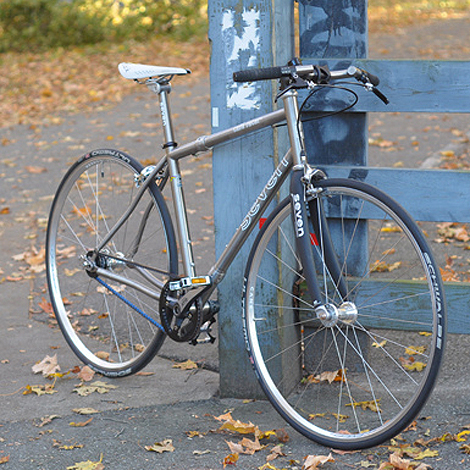
Seven Cafe Racer

One of the things a custom builder can do better than most production builders is find the sweet spots in between the traditional cycling categories. Constance Winters of Bicycling.com recently tested our Cafe Racer SL in just such a special configuration, somewhere in the space between go-fast road bike and all-purpose commuter.

First, this bike has S&S couplings so it can be broken down for travel. Total time to assemble this one, straight out of the case, is about ten minutes.

Next, it has a custom Tiberius handlebar, which gives the rider multiple hand position options, both aggressive and more upright.

And finally, it features a super quiet, super clean single-speed belt drive. The belt keeps you from getting grease on your pants if you’re riding for business, and its elegant simplicity makes break down and reassembly that much easier.

All of this in a sub-15lb package.

Image: Constance Winters

Bike Builders

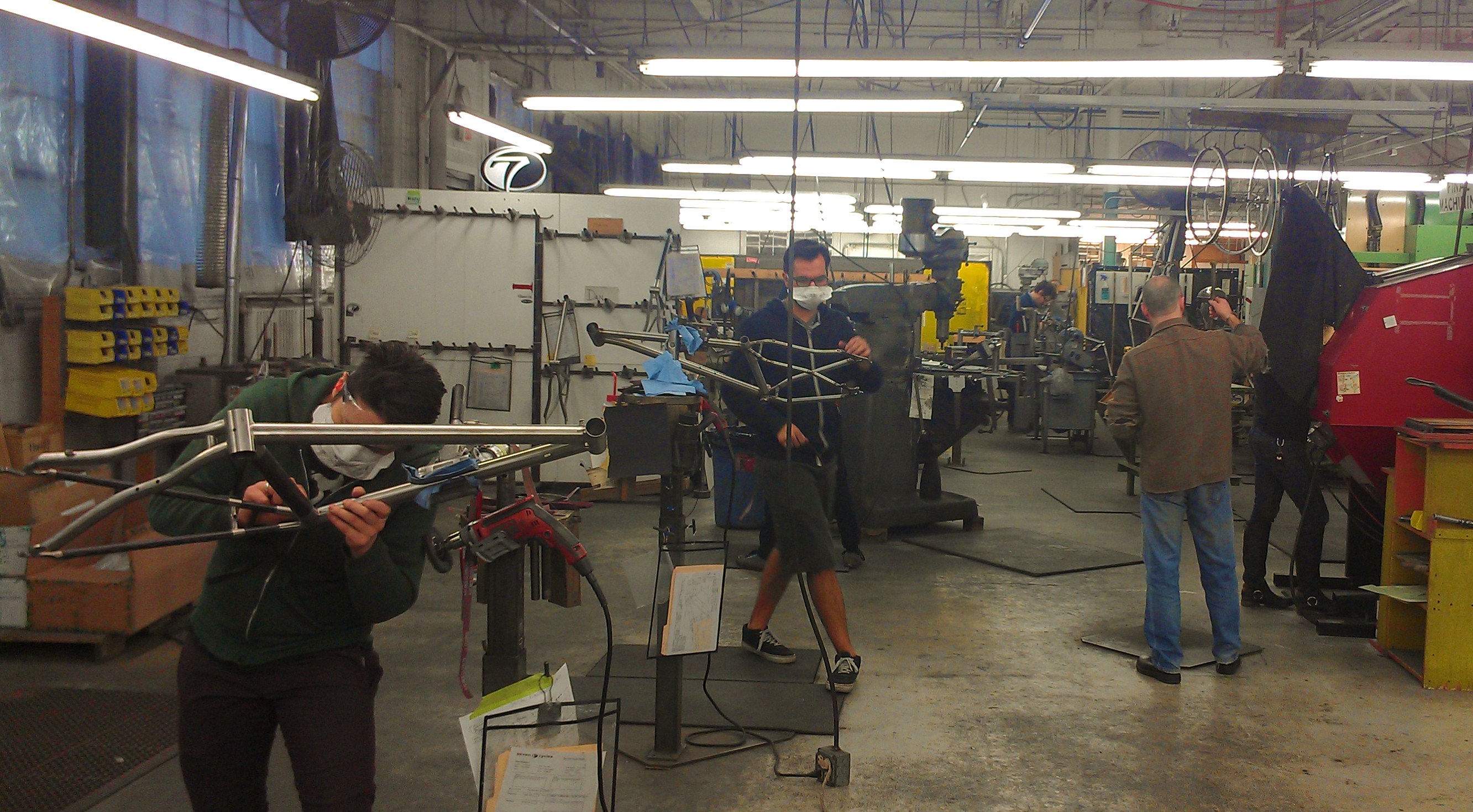
A busy production floor

First there is Skip who opens the shop early. He uses the pre-dawn to make his rounds, cleaning and lubing all the machines on the shop floor. He spends all his days maintaining our tools and building new fixtures. Skip is the bike builder who builds no bikes.

Next through the door is Mike or Chad. Mike is our lead machinist. He does the CAD drawings of frames that guide us as we move from tube set to finished frame. Chad hits the finishing department and tries to work his way through whatever didn’t get done the day before. He fires up the drills and fills the air with the whirring noise of things being built.

Jennifer and Rob arrive. Inventories get sifted through. Parts orders get readied. Rob sorts a stack of folders, orders for new bikes with designs from Dan or Neil already done. He evaluates their work, makes notes for changes, improvements.

The welders, Stef, Tim and Yoshi, show up. They wheel the freshly prepped tubes from machining into their own department and assemble them in the frame jigs. Gas lines get fitted to the jigs. Oxygen gets purged. Joints get tacked and then checked for alignment.

Painters come, too, Staci and Jordan. They pull primed frames from the drying booth and begin sanding out imperfections or begin masking for top coats.

In the office, the blinds slide noisily aside and Karl sits down at his desk, cracks his email to see what’s come in over night, questions from shops from all over the world. Orders get pulled off the fax machine. The coffeemaker stirs to life.

Throughout the morning, the rest of the crew rolls in, Matt and Mary, Dan and Nick and Lloyd, Seth and Lauren, Sutts. The whirring sounds rise and fall. Compressors fire and shut off, and frame-by-frame the boxes fill up in shipping.

Love to Ride – The Photographers – Kristof Ramon

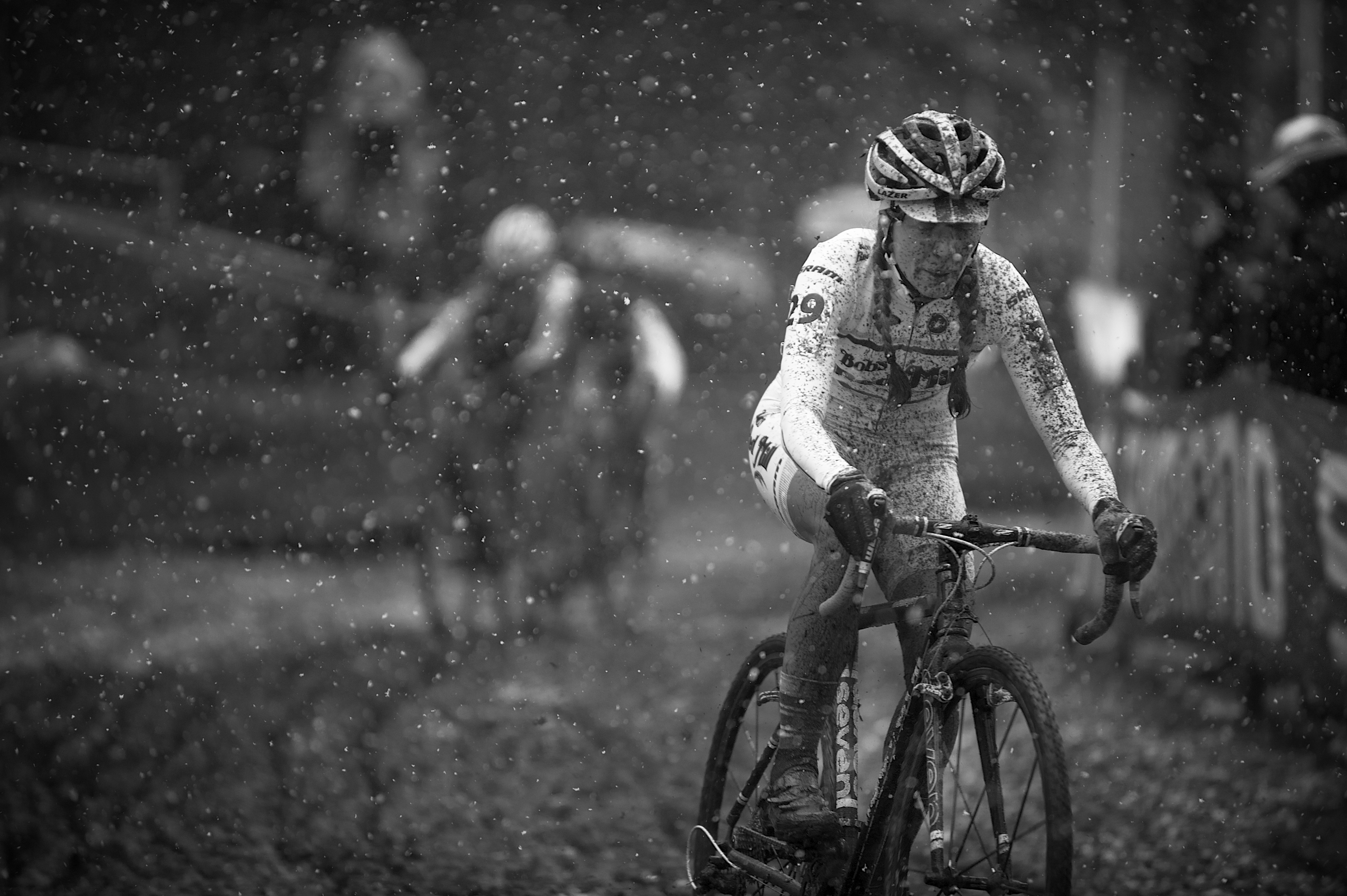
Mo Bruno Roy at the CX races

The excitement of a bike race is very rarely captured in the single click of a camera’s shutter. There are so many intimate details in the course of a day, a story that starts before the whistle blows and continues long after the finish.  The story is told by faces of pain, in loss or injury, or even in moments of extreme joy. There are nervous glances and rituals behind the scene, environments of beauty, tranquility and sheer chaos.

Kristof Ramon has an eye for such intimacies.  His photos of large bike races such as the Paris Roubaix  and most recently the Ironman 2012 World Championships evoke emotion while simultaneously giving us context for what is happening in the shot.  His ability to capture the very essence of what it means to be a cyclist and athlete makes him a story-teller as much as a taker of pictures.  His photos tell both action and the in-between; the glamour and the grit.

We were honored to be able to use one of Kristof’s photos for the Love to Ride project, a haunting portrait of Seven-sponsored racer Mo Bruno Roy at the 2011 World Cup Cyclocross in Namur, Belgium.

Wasting No Time

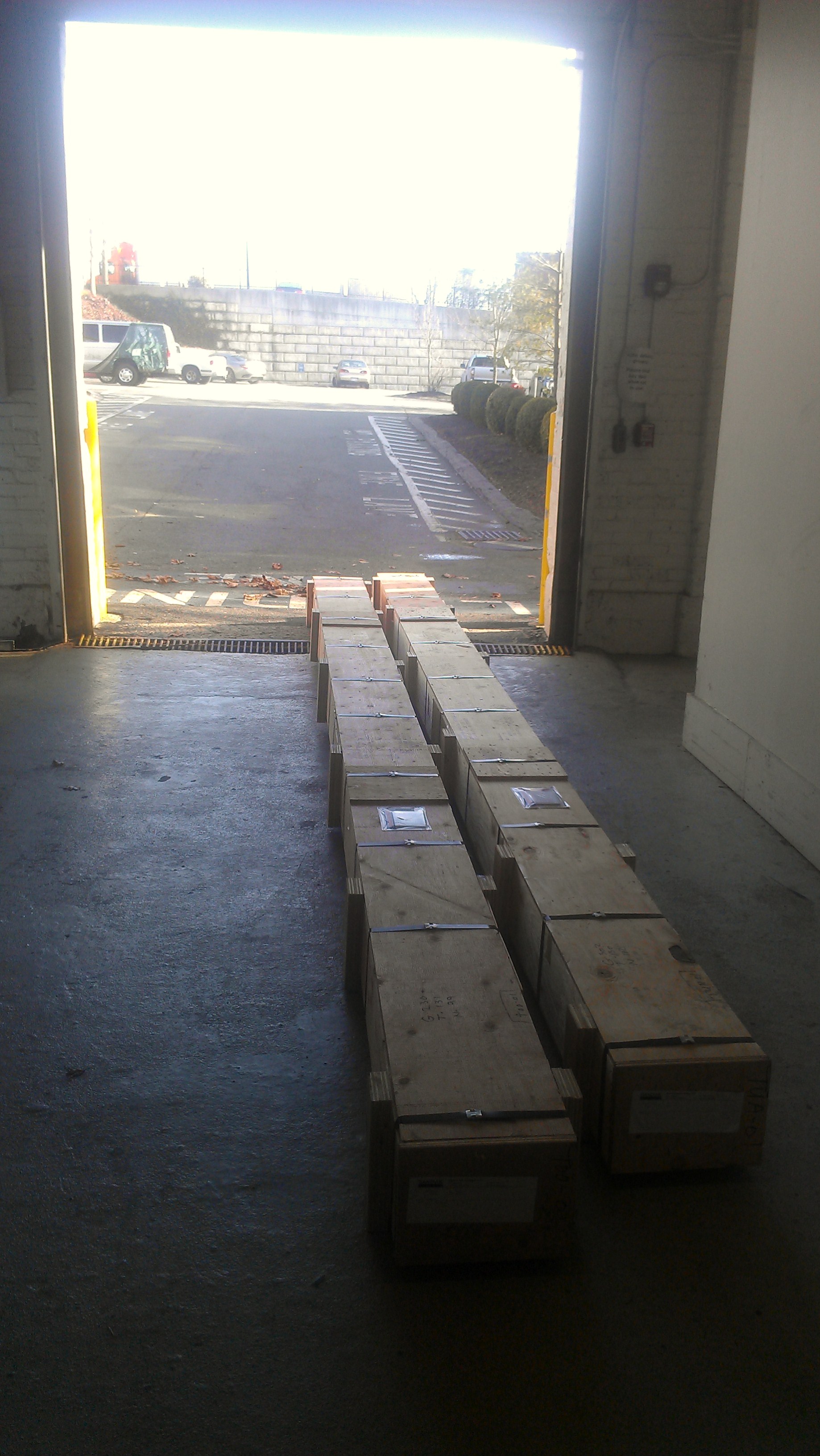
Long wooden crates at the garage door entrance

Well, we made it through the holiday rush, getting out all those bikes that had been promised as gifts, and it was nice to get a few days off with family and friends to over-eat, dream about bike riding and then over-eat some more.

Sure enough, a truck rolled up first thing this morning with three boxes of raw Ti tubing to be crafted into the New Year’s custom bikes. Nick and Sutts loaded the first one onto the dolly and wheeled it off to machining.

Lathes and mills spun to life. The compressor to the paint booth cycled on and off. The coffee maker bubbled and spluttered.

We gathered briefly by Nick’s computer in shipping to watch the end of the World Cup cyclocross from Belgium (SPOILER ALERT: Nys won, again), before catching up on the orders sent in over the weekend, updating status on bikes in process and chatting idly about the impending winter storm.

This is the thing about doing something you love to do. It’s nice to take a break, but it’s also nice to get back to work, wasting no time, while riders here, there and everywhere dream about their new bike.

The Birth of Mo Pro 2.0

Mo Pro 2 frame nearing completion

A few weeks ago, Mo Bruno Roy returned her original Mudhoney PRO prototype. Affectionately called the Mo Honey PRO, that bike was the test case for the bike that became the production Mudhoney PRO, the bike that customers all over the world have ridden over the last season. Mo’s original was put together with hand cut and filed lugs, and she raced it hard this season so we could know more about our basic design assumptions, and to gather experiential data for the second iteration, Mo Pro 2.0, of this race-specific machine.
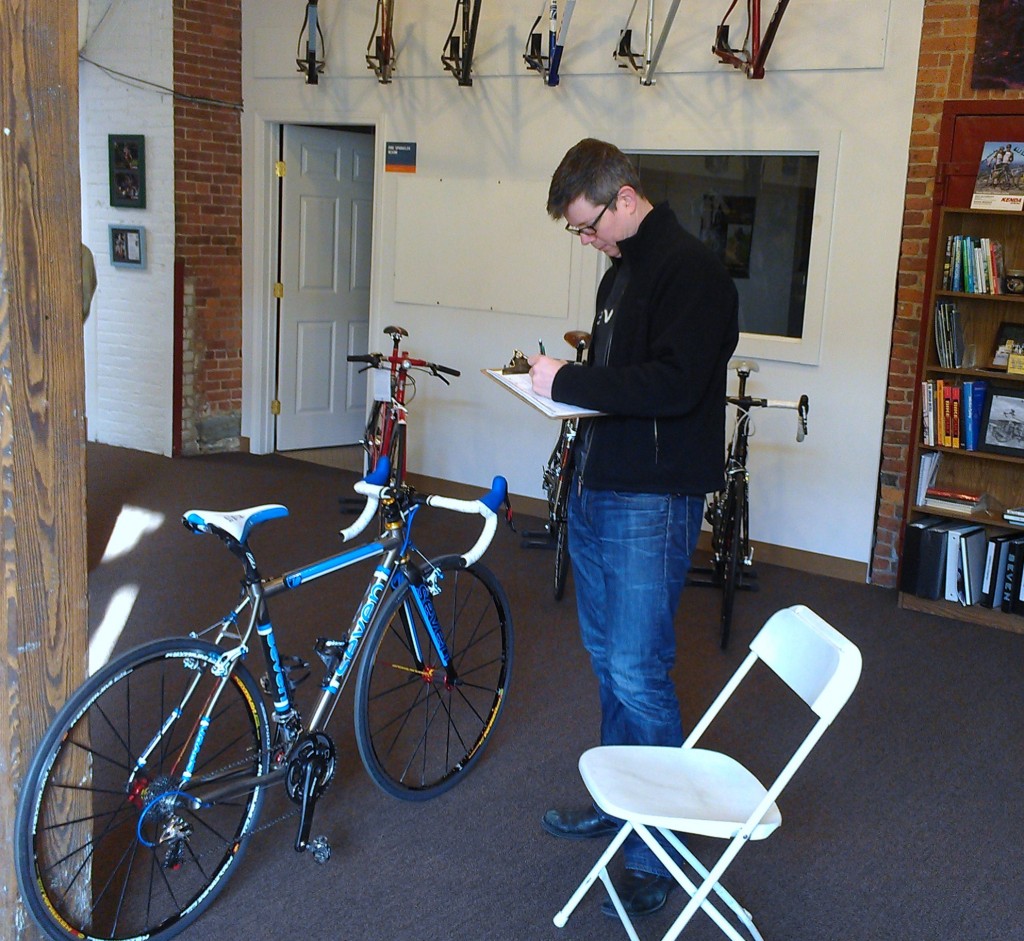
Rob going over specs for Mo

During our debrief with her, and with her mechanic/husband Matt Roy, we noted a few big, necessary changes. First, Mo wanted to change her riding position. She wanted to come forward, and up a little. To do that, she needed to make some component changes, and to maintain the handling she prefers after those changes, we needed to adjust the geometry. Easy enough.

Next, she wanted more tire clearance at the chain and seat stays. The original prototype was built with tight tolerances for racing, but we learned that just a little more mud clearance would be better. That presented a unique challenge, because Mo’s frame is small. In order to get the clearance she wanted, we experimented with a single-bend, butted seat stay designed specifically for carbon bonding. That little bit of bend gave us just what we were looking for, and it represented a step forward for the super thin stays we’ve been working with for Mo’s race bikes. The complimentary chain stays required 20 separate operations in initial machining. This is serious stuff.
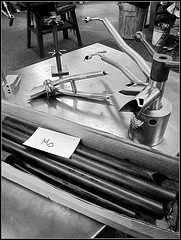
Parts of Mo's frame ready for assembly

In the past, we’ve built bikes for Mo that could be adapted to multiple purposes. A little attention from her pro mechanic husband would convert one of her race rigs for road training. Not this bike. Mo runs a somewhat unique crank set with 34/44 chain rings, and her seat/chain stays are optimized to work only with those rings, coupled with a 32mm tire. This is as race specific as a bike gets. It’s a bike for now, for winning races.

We opted to build for cantilever brakes, too, but only because race ready, drop bar, hydraulic disc brakes aren’t quite ready yet. Again, we wanted to build her the optimal race bike for right now, not a bike with compromises for future adaptation.

The final design hurdle we chose to address was toe overlap. Conventionally, a frame this small would have some overlap, and through the years, this was always something Mo was comfortable with, even though we offered to do away with it for her. This time out, we made some adjustments to the geometry to eliminate it, and that gives her more confidence in the technical sections of the cyclocross courses this bike was meant to destroy.
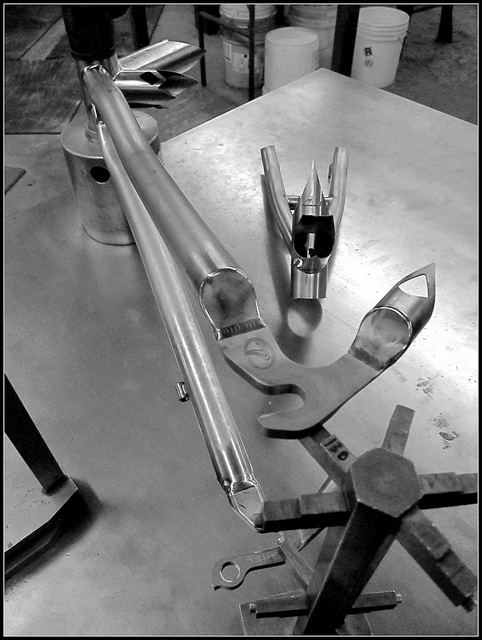
bottom bracket, chainstays and dropouts of a 622 in production

A lot of work went into pre-build design on the Mo Pro 2.0, and that led to a marathon build session that lasted long into the Friday night before Mo’s first race on it, on the Saturday. Seven Production Manager Matt O’Keefe did the final machining on this one himself, before handing it off to Staci for the rock star decal treatment.

As ever, our sponsorships are aimed at exactly this sort of collaboration. We built the original bikes to prove a concept we wanted to bring into production. After building the first generation prototypes, we then designed all the fixturing we would need to do the same design for customer bikes. In turn, the fixturing informed the accuracy and evolution of the second generation bike, which taught us about new ways to manipulate thin stays for small builds. It’s this thread that connects all our design and build work and allows everything to move forward, and to be able to pursue that thread with the input and participation of pros like Mo and Matt makes bike building fun. It reminds us why we do this.
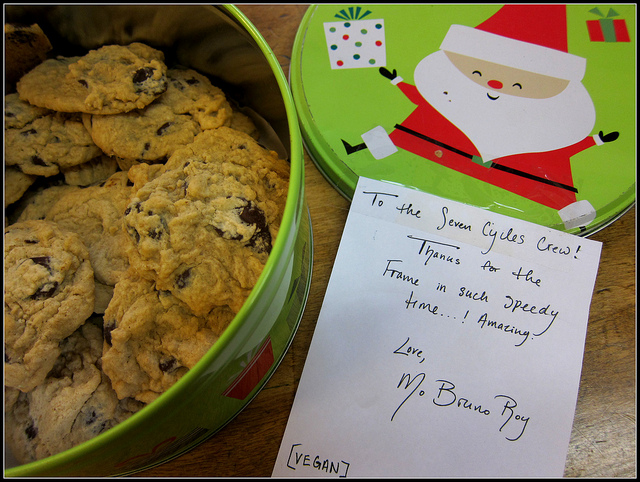
A tin of homemade cookies

Another solid reminder came in a Christmas tin a few days later. Her feedback on the bike itself is exactly what we wanted to hear, that it combines the best of her first Seven race bike and the first generation Mo Honey PRO. That confirms that we’re listening, and without listening you can’t build great custom bikes. It doesn’t matter whether you’re building for a pro like Mo or someone who will never race a day in their lives. The process is the same. Listen to what the rider wants. Apply everything you learn to everything new you want to do. Keep building. Keep iterating. Occasionally, just occasionally, stop to eat the cookies.

Matt made a cool time lapse video of the build that you can see here:

Project Codename: #MoPRO2 from Matt Roy on Vimeo.

And we were also fortunate to catch the eye of the Velo News staff at our very first race. Emily Zinn did a photo gallery of the project for their site.